Hazard trees, for the most part, are not really a concern until almighty Mother Nature decides to churn up the action. When one of our notorious summer storms comes rolling through, these "hazards" can become "weapons." So if not properly dealt with ahead of time, you might be putting your property or family in danger.
What You Need to Know
How to Identify Hazard Trees?
The trees that surround us are essential for comfort and life. They produce much of the oxygen that we need to breathe and they do other things too such as providing shade, wind protection and beautifying landscapes. When you take a close look at how each tree functions you realize they are truly a gift from God.
At some point in their growth, trees may lose some of their appeal. They can become ill, unsightly and pose a threat to both people and property. When an individual tree gets to this point it no longer benefits its owner but then becomes a liability. Sometimes tree weaknesses are not obvious and only become exposed after an event such as a strong storm.
It does not take a trained arborist to spot the more obvious signs that a tree has the potential to become a hazard. Here are some of those signs:
A tree is growing or leaning in an unnatural way
A tree's canopy has voids and sparse areas and several dying or dead branches
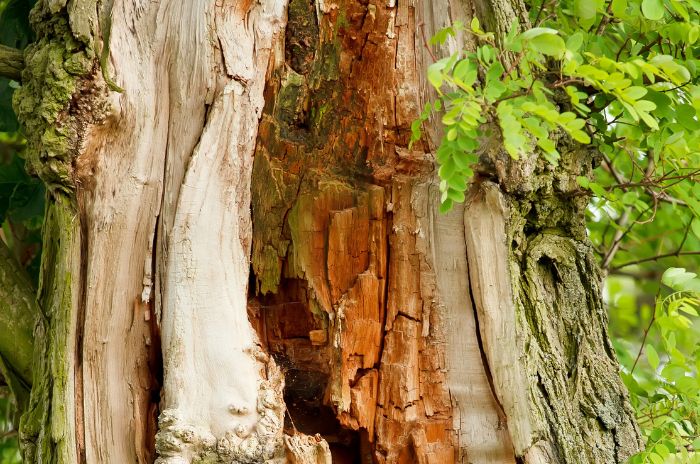
A tree has a trunk with signs of obvious decay or large cracks
A tree that has multiple trunks is more apt to split apart in a storm
Loose or buckling soil at the base of a tree can indicate a root problem
Fungi or mushrooms growing at the base of a tree are often a sign of tree decay
Need Help ID'ing Hazard Trees?
Our Trained Arborists Can Help
If you live in Volusia or Flagler County, we at Aardvark Tree Service can help you assess the problem trees in your landscape.
For help with your hazard tree identification, please give our team a call 24/7.